Forest schools

Downsman Article

 A large part of my work for the past 20 years has been education, I am after all a teacher. I have made a conscious choice to work outside the classroom. This has taken a variety of forms environmental education, sustainable transport choice promotion (London), Conservation, Living history education and now forest schools.

Forest schools is an approach which has gained massively in popularity over the last 10 years. This is the antithesis of modern trends in education towards increased assessment which focus upon the ‘core skills’ of literacy and numeracy.

So what is the forest schools approach and how does this enhance educational experiences?

In 2002 an attempt was made to define forest schools ‘An inspirational process that offers children, young people and adults regular opportunities to achieve, develop confidence and self esteem through hands-on learning experiences in a local woodland environment.’

Following the formation of the forest schools association in 2011 the following was drawn up

1: Forest School is a long-term process of frequent and regular sessions in a woodland or natural environment, rather than a one-off visit. Planning, adaptation, observations and reviewing are integral elements of Forest School.

2: Forest School takes place in a woodland or natural wooded environment to support the development of a relationship between the learner and the natural world.

3: Forest School aims to promote the holistic development of all those involved, fostering resilient, confident, independent and creative learners

4: Forest School offers learners the opportunity to take supported risks appropriate to the environment and to themselves.

5: Forest School is run by qualified Forest School practitioners who continuously maintain and develop their professional practice.

6: Forest School uses a range of learner-centred processes to create a community for development and learning

When we use the word learner centred, what we really mean is play, we all learn at our best when playing adults and children alike. We all know that state when we are totally absorbed in an activity this is when we are learning at our best,this has been proven by various educational psychologists, Our goal as forest school tutors is to promote opportunities for this by supporting and facilitating play in a non interventionist style.

This is done through flow learning techniques, with reflection, risk awareness, active games, team working, peer review, routine and free play sessions carefully balanced to enhance learning.

One of the most important outcomes of forest schools is its ability to promote growth in emotional intelligence, which is increasingly seen as more of an indicator of success than IQ or academic attainment.

New fangled ?

The forest schools approach to education is by no means new having its roots in the 19thcentury Romantics movement (awe of nature and the sublime creativity, freedom and innocence of the child) this influenced Philosphers and peadgogists of the time leading to the foundation of educational and out of school activities which were child centred whilst promoting independent learning through play.

At the same time the factory and work houses of the industrial revolution were subject to a series of act of parliament starting with the peel factory act, and developed further by lord Shaftesbury who pushed through further acts. These limited the hours children could work. It also imposed the requirement of employers to provide education for children in the three r’s.

In the 1950s the ‘romantics’ approach was adopted by nurseries in Germany and schools throughout Scandinavia to 7 years of age, in the UK their were nods towards this with a more child centred approach to learning after the foundation of the comprehensive schools system

In the 1970’s and 80’s in an endeavour to increase Literacy and numeracy skills a more teacher led outcome centred approach was adopted with the National curriculum as its centre piece. As a reaction to this there was a growth in ‘alternative ‘education models such as Montessorri, Wardorf Steiner schools and a natural education / forest schools approach to learning. By 2008 some balance was introduced as a child-led approach was universally adopted through the early years foundation strategy up to 5 years.

Summary

I’m not sure about you but I feel that the time I spent ‘playing out in the fields and woods’ as a child was massively valuable to my upbringing / development. Forest schools gives a way in which this can still be done in our risk averse society by giving children the ability to assess risk, build in self confidence and independence. In a way that is monitored and safe.

From an educational prospective it helps to build upon the skills that schools are finding it harder and harder to squeeze into their teaching schedule, the positive outcomes are now well documented by both pedigogists and psychologists. I hope that ultimately it will be acknowledged that attainment levels will only show significant improvement through the integration of the teaching methods employed within forest schools.
http://www.forestschoolassociation.org

Roundhouses nearing completion

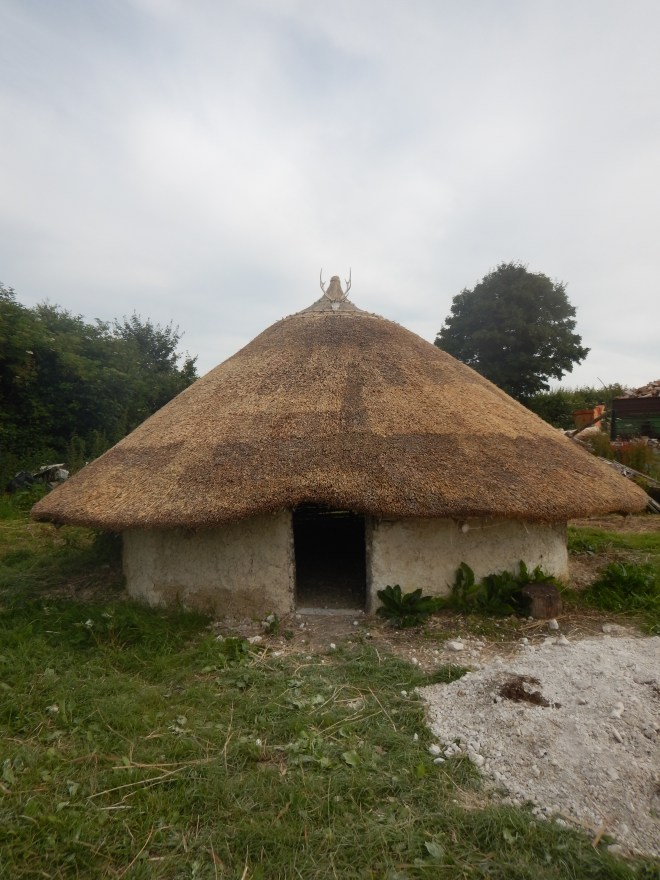
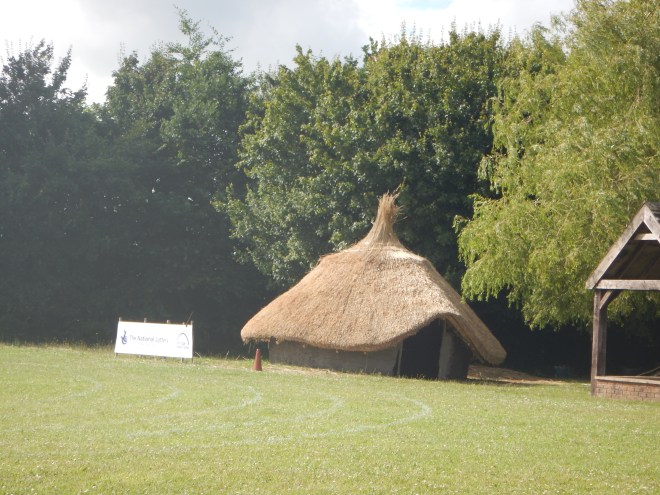
Over the last 18months I have been building a roundhouse in Cashmore, there have been several delays due to work commitments and injury, with help from Nigel Turton I have now finished the thatch on this roundhouse. Only the rest of the daubing left to do. This is a fun and messy activity if you and a group of friends want to get involved just drop me a line.

DSCN0188

I have also been thatching a roundhouse at Bearwood school This is heritage lottery funded project the frame and daubing been done by Poole Museums education team and adults and children from Bearwood school,the house is already being used for education sessions, with temperatures recorded and maths lessons on dimensions and I’ve not seen all they are doing!  There are a few finishing touches to be made on the roof and the walls need a little more daubing but we are nearly there.

DSCN0199


Sunken feature building Starts

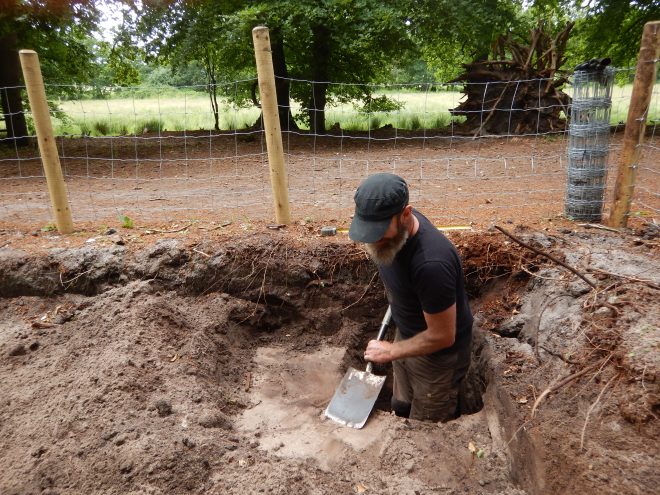
I have recently been commissioned by Poole museum service to build a Saxon sunken feature building at Upton Country park . This build will include some of the timbers salvaged from the old roman building on the site which sadly burned down.

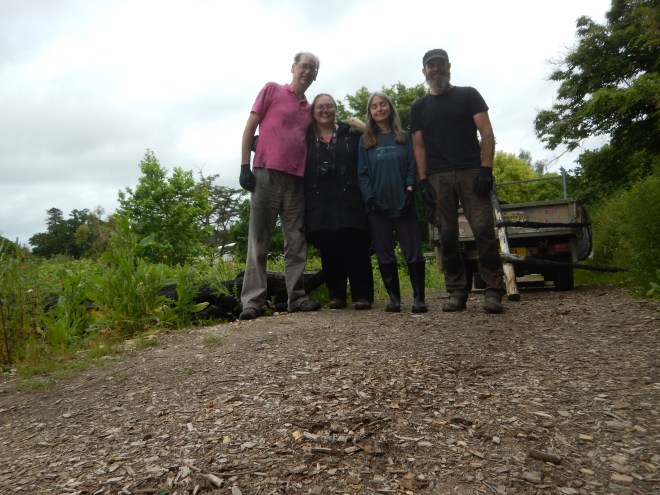
I will post a picture soon of what i hope the building to look like on completion. This week we have been working with Volunteers Julie, Sam and Steven on timbers and assessing soil conditions on site.

DSCN0091DSCN0099

DSCN0104

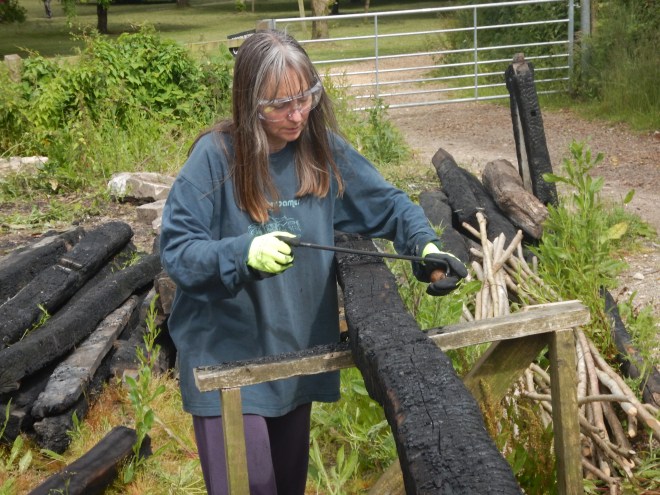
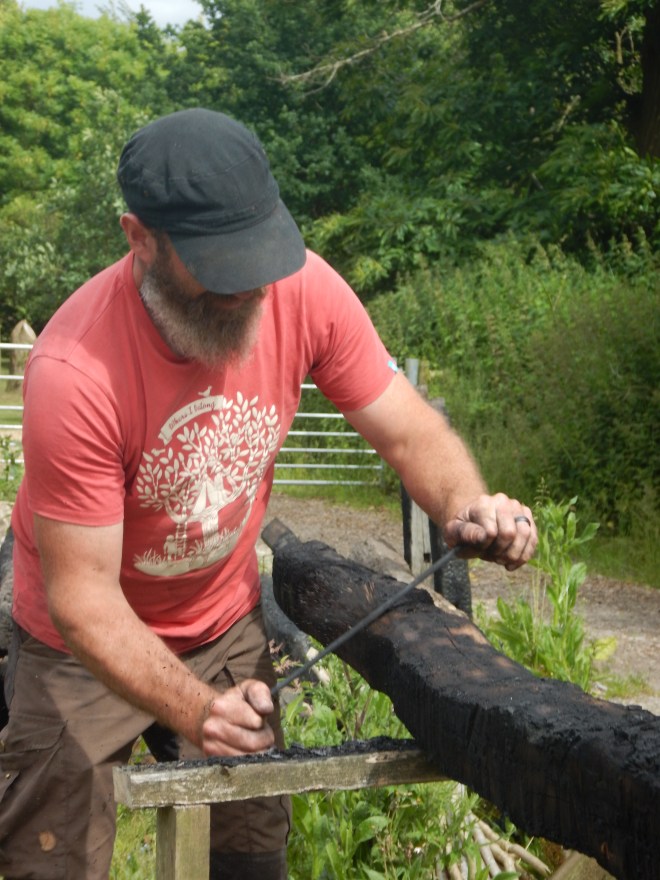
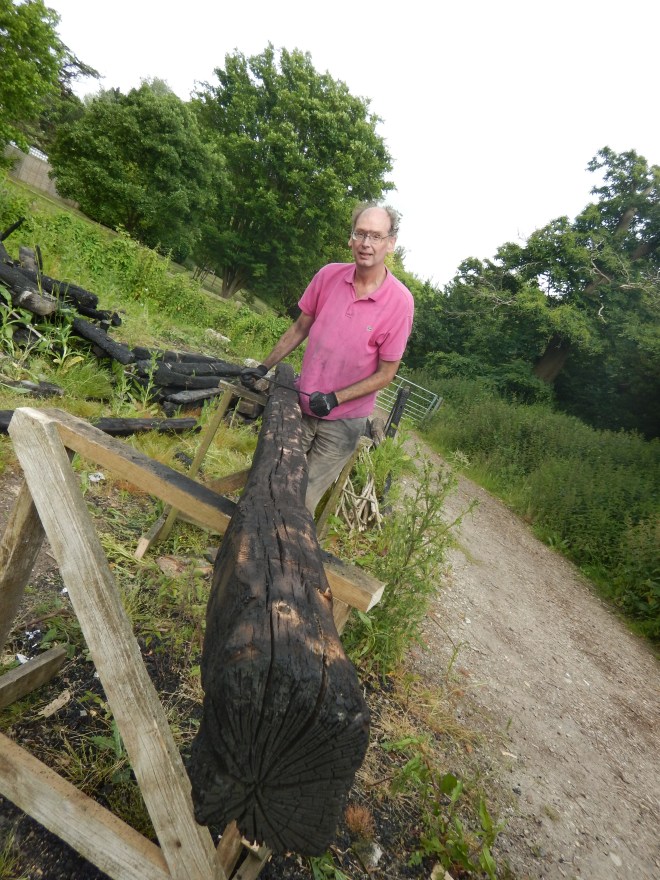
Removing charcoal from oak timbers

DSCN0103

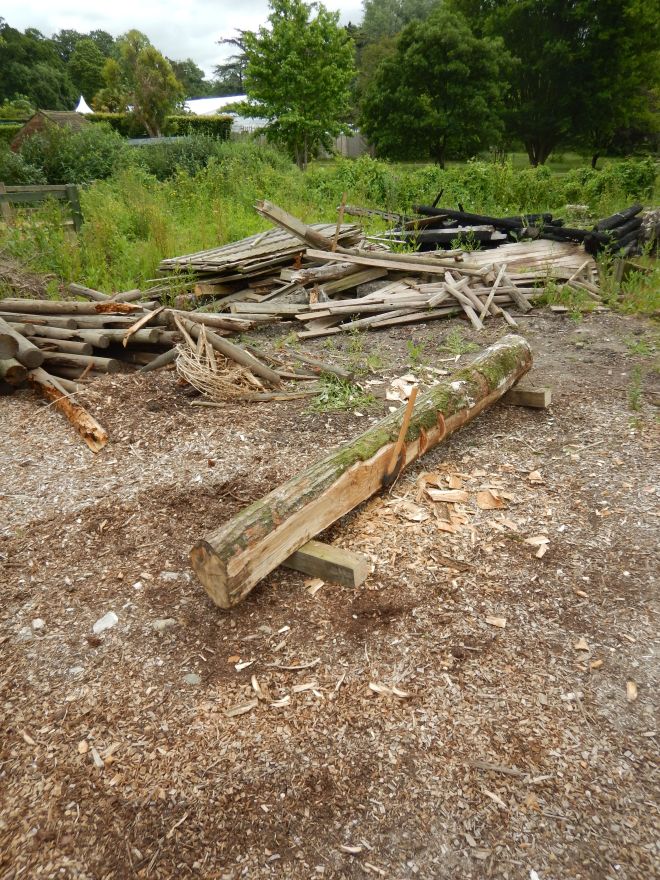
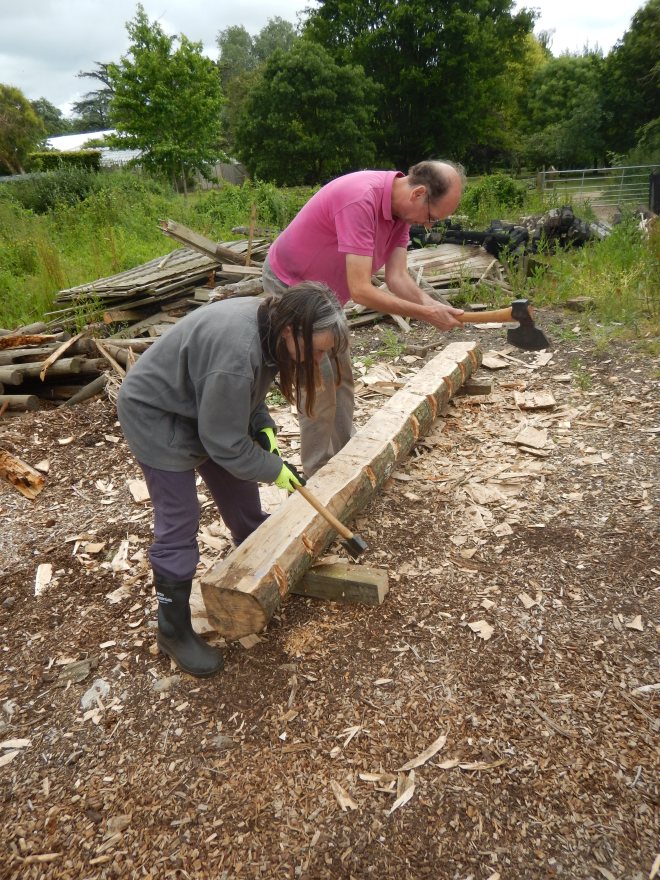
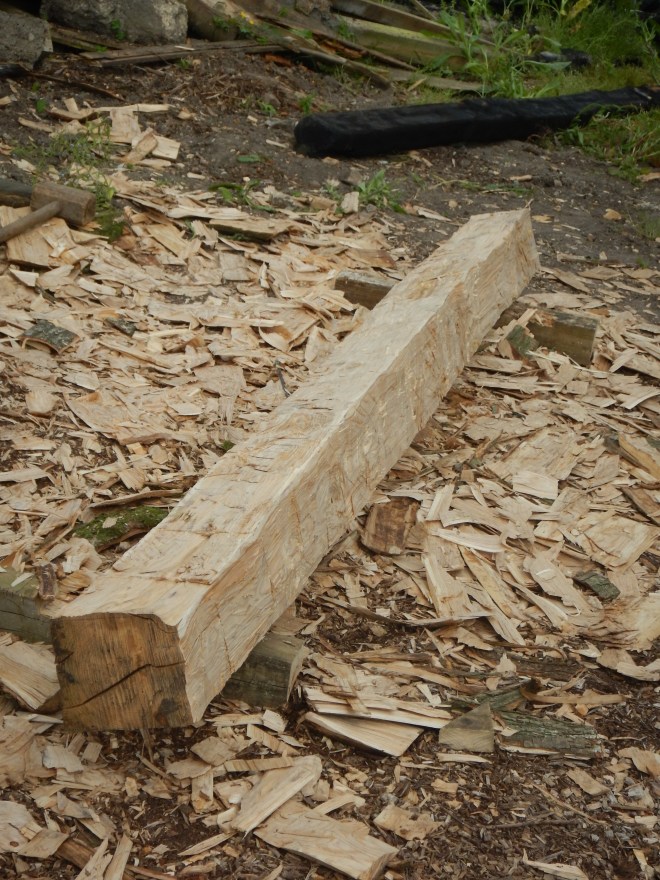
Making a round timber square

DSCN0109

Making a round timber square

DSCN0108

Removing charcoal from oak timbers

DSCN0110DSCN0080DSCN0082

A poem about play

Found this today, play is learning !

When I play outside


  • I take risks
  • I face challenges
  • I solve problems
  • I make choices
  • I belong
  • I learn about my world
  • I discover and explore
  • I experiment
  • I imagine
  • I create
  • I take responsibility
  • I collaborate, communicate and co-operate
  • I lead
  • I can be noisy, messy and adventurous
  • I am independent
  • I am resilient
  • My body is strong
  • I learn about the natural world
  • I invent
  • I build
  • I am calmer and less anxious
  • I have a strong immune system
  • I wonder
  • I feel good about myself
  • I can be wild
  • I can be still
  • I find out what my body can do
  • I observe, I smell, I listen, I touch, I taste
  • I focus and concentrate
  • I feel connected to the natural world
  • I watch things grow
  • I explore mathematical and scientific concepts
  • I solve conflicts
  • I pretend
  • I am motivated
  • I am curious
  • I am master of my universe
  • I am healthy
  • I make up stories
  • I master physical skills
  • I have fun

Outdoor Play is NOT a waste of time


Fires and wood

The latest article for the Downsman.

Many folk in Handley use wood to heat their homes, either as their primary source of heating or for the reassurance and comfort that a fire brings. There is something about fire, we feel connected to it even in the modern world; we cling to it like an old friend. Light a fire in the absence of modern distractions and your eye is drawn and attention focused in a trancelike state upon those leaping flames.

Our ability to collect/control wild fire and ultimately make fire ourselves has influenced our evolution. Apart from the warmth and protection that fire brings, cooked food is easier to digest. You therefore need to catch or collect less. Time is freed up for more creative endeavours stimulating intellectual development and ultimately, through evolution, genes for larger brain development were selected. It’s not unreasonable to state that ‘we wouldn’t be human if we hadn’t formed a relationship with fire’

Timber suppliers are currently stockpiling wood cross cutting and splitting stacking back to dry. So come the autumn they are ready when we rush to our phones to call for our supply of split Ash and conifer kindling for the winter ahead. Maybe we source wood ourselves in which case we should be doing the same.

A useful poem was often used, which you may have heard, to remember the relative merits of different woods.

Conifers and birch get a bad review within this poem, and for good reason. They burn up quickly and fir spits quite badly. However it must be remembered that this poem was written when all house fires were open, the heat flaring up the chimney rather than being held in the embers. Different woods were also used for different fire types, i.e. birch bundles were used to heat up the bakers ovens.

Most people now use wood-burning stoves. These are much more efficient and spitting wood is not a problem. Wood-burners have been used in Scandinavia for 150 years, where they burn predominantly birch and conifers. Newer stoves are now made incredibly efficient by recirculating air-flow. New flues and flue liners reduce issues with tar build-up from conifers and ash build up in chimneys which can lead to chimney fires, in short you can burn any seasoned wood other than treated wood relatively cleanly and with less of a carbon footprint than conventional power generation. In fact it’s the ultimate renewable resource if managed well.

The Firewood Poem


Beechwood fires are bright and clear, If the logs are kept a year,

Chestnut’s only good they say,
If for logs ’tis laid away.


Make a fire of Elder tree,
Death within your house will be;


But ash new or ash old,
Is fit for a queen with crown of gold

Birch and fir logs burn too fast


Blaze up bright and do not last,

it is by the Irish said
 Hawthorn bakes the sweetest bread.


Elm wood burns like churchyard mould, 
E’en the very flames are cold


But ash green or ash brown, 
Is fit for a queen with golden crown

Poplar gives a bitter smoke,
Fills your eyes and makes you choke,

Apple wood will scent your room


Pear wood smells like flowers in bloom


Oaken logs, if dry and old
 keep away the winter’s cold


But ash wet or ash dry 
a king shall warm his slippers by.

In this poem we find that ash is the best; but is it ?   The answer is yes; and no! In short it’s a wonderful wood for timber suppliers, during the winter it has the lowest moisture content of any standing wood meaning that it needs storing for less time and less carefully. However like all other woods it is better properly seasoned. It also splits very easily reducing processing costs and making it easier for clients to handle. But is ash the best wood for burning?

As you may know I have a background in science so lets get straight to the maths, its not overly complicated as we all have heating bills which are rated KWh a typical 4 bedroom houses uses 3200 KWh a year.

Wood is measured in KWh/m3 or per kg (kilowatt hours / m3).

Wood type Average Kwh/m3
Holly 3591
Hornbeam 3511
Beech 3032
Ash 2926
Oak 2926
Douglas Fir 2766
Birch 2660
Poplar 2022

The numbers in this table speak for themselves, but as we live in an area with a lot of beech it might be worth getting some, why not cut down that hornbeam hedge and burn, a replacement mixed fruit bearing hedge would be better for you and wildlife !

As these numbers are per m3 not by weight, you can burn any wood you like you just need more of it to get the same energy yield. So if you can negotiate a reduction for inferior wood have enough storage and don’t mind visiting the shed more often, go for it. There is also a certain wisdom in having a mixed pile so you can choose your wood depending on the temperature.

The figures are for energy contained in the fuel, even the best stoves are only 70% efficient which compared to 10% for an open fire is still good. Its also easy to forget that wood is incredibly variable even within a species there can be as much as 30% variance in density of growth depending on where and how the tree has grown. These figures are from Norway where wood is slower grown. I maintain that some of the best firewood is from old gnarled hawthorn and blackthorn hedge stools the wood is really dense and burns hot and slow.

You make up your own mind I will be burning a mixture of Ash, hazel, conifers and old hedge material because its what I have. If you can find well seasoned, Holly , Hornbeam or Beech snap it up, your wood pile will be much smaller.

Next:- Symbiosis in Ancient woodlands.


Good reads

Norwegian wood Chopping stacking and drying wood the Scandinavian way (Lars Mytting)

The man who made things from trees (Robert Penn)

The woodland way a permaculture approach to woodland management (Ben Law)